About Me

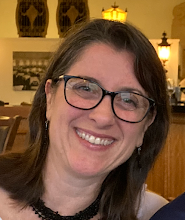
My photo
After living in Portugal for 15 years and teaching English in various capacities there, including at the University of Aveiro, I moved back to the United States in 2019. Returning for our church was the best decision we have ever made and God has been so good to us. Reading the Bible everyday and trying to keep the commandments of Jesus are my priorities, along with loving my family and all the people God has put into my life. Helping people is something I enjoy doing, and meeting the individual needs of students who want to learn English is important to me.

Friday, October 7, 2011

Our Hometown is Far Away  ― The Diary of Three Sisters

translated by, Masaharu Yamauchi, from the Asahi Newspapar, Japan                      
山内 雅晴
edited by, Rebecca Silva

‘The fear of aftershocks comes to mind’  
Five months have passed since the big earthquake happened. I still remember clearly the experience of the earthquake, and I think I won’t ever completely forget.
What bothered me most after the earthquake was the problem with water and electricity.
Since we couldn’t flush the toilets, we poured water that the army brought in a big tank into buckets and used them after two or three people went to the toilet.
 Five days later, I could take a bath. In an emergency, I thought I wouldn’t die if I didn’t take a bath for a while. But I had a hard time because my hair became so greasy. The bath that we three sisters took wasn’t hot, it was almost cold water, that made us shiver, but I felt nothing less than happiness.
Also, I have coming to my mind the fear of aftershocks. It was soon after that powerful aftershocks followed a large number of times a day, not just a few times.
But I gradually came to understand that big aftershocks followed -we needed to decide whether to evacuate or not-according to how strong the aftershocks were. ‘Wobbly’ isn’t a big deal. But the aftershock that starts with small vertical vibrations followed by a roaring from underground becomes powerful.
Recently my concern grows very big every time I hear the news predicting a big earthquake and powerful aftershocks. Since simply worrying doesn’t take you anywhere, I think we have to decide where we evacuate to and how we will contact other family members in preparation for future earthquakes.  
(Nanako)
◇
The life of these three students who suffered from the big earthquake and the nuclear power plant disaster, and transferred to the Kanagawa prefecture have seemed to settle down gradually. But they have lived a life that they could have never imagined living over the last year.
This is a commentary about how they feel on a daily basis in the Kanagawa prefecture that is far from their hometown. We have three sisters who moved to Fujisawa city in the Kanagawa prefecture from Ofunato city where the big tsunami hit.

(From top to bottom) Mariko Hayashizaki(17), Nanako(16), Sayako(13). March 11th, they suffered in Ofunato city, Iwate prefecture. Although all family members- 5 including the parents - were safe, their house was partially destroyed by the tsunami. For three weeks, they moved around from shelters to their grandmother’s house,  and so on. At the end of March, they transferred to Fujisawa city.


Sunday, October 2, 2011

Punch Line

The idiom, Punch Line, is used in a recent CNN Video about U.S. Governor Chris Christie's weight.

Wednesday, June 29, 2011

Minamisanriku Diary (from the Asahi newspaper)

Photo: A truck loaded with household belongings on its carrier  ‘Sorry for doing well’
Translated by: Masaharu Yamauchi
山内 雅晴
Edited by: Rebecca Silva

In the devastated area, as a reporter, there are two questions I have to ask sufferers: ‘how about your house?’ and ‘how about your family?’ I sometimes feel heart broken when I ask these questions that evoke the depth of their hollow sorrow.
I got a similar feeling when I asked Ms. Hiromi (35) these questions. She bowed her head saying, “I’m sorry. Both my family and house are ok.”
Her house, that was built on a highland, was spared the damage from the tsunami. But, the next day after I met her, her family moved to the next city. “We can’t live in Minamisanriku where there is no water supply and most of the shops have been flooded by the tsunami. Above all, when I walk in the town, I feel like being told, ‘You have good luck, because both your family and car are ok.’ and bursting.”
The other day, when her son tried to bring a baseball uniform to join a baseball practice, she told him, “Your teammates won’t have them. You have to think more.” After she said this, she was about to break into tears and put her arm around him. “Sorry. You have done nothing wrong.”
She told me that she would come back someday…. She looked over her shoulder many times from a truck that was loaded with her household belongings while driving away from the devastated town.   
(Hideyuki  Miura)


Wednesday, June 15, 2011

A Cry of Hope

-An initial cry echoed in a town that was filled with rubble and debris…..
Translated by: Masaharu Yamauchi, from Focus magazine, Japan                      
山内 雅晴
Edited by: Rebecca Silva

Words sometimes show their cruel fangs.
“Hang in there.” “I support you.” Encouragement given to the sufferers.
But, they had already hung in there. How could they hang in there anymore?
There is nothing like a hope that is formed from ‘warmth’, not empty words.
“She was born on an unforgettable Spring day. People treated us very kindly, and that’s why we had to express much thanks to them. My husband and I talked about that. We named her ‘Sumire’ (it is composed of three Chinese characters that represent congratulations, beauty, and thankful.) to convey our feelings for her.”
“In an evacuation center, I was blessed with a lot of kindness. Some people brought portable heat packs and put a stove on for me even though it was forbidden because of the oil shortage.”
Parents’ smiles and Sumire’s sleeping face are a shining ray of recovery.
Existence beyond helpless words.
A tiny life brings big hope to the devastated area. 


Wednesday, June 1, 2011

Silent Aftermath - Yamauchi Masaharu

“The scene where human figures had evaporated within a 20km radius of the Fukushima Nuclear Plant-and one can hear only the voice of the wind”
All sounds were gone from the town where the nuclear power plant is, and three weeks had passed since the big earthquake happened. Only the sound of the wind blowing strongly could be heard in a dead calm main street. There was a Siberian Husky lying down on the center line of a two lane road. And then a mongrel dog came along on the sidewalk, and another one from out of nowhere. All of them were still wearing collars. They were looking at me as if they were asking something, standing in front of an arch saying ‘Bright Future Nuclear Energy.’
Not only were dogs stranded. I found a cowshed within a ten kilometer radius from the nuclear power plant. I approached and said, ‘Hello’, but no response. When I stepped into the cowshed, it smelled pretty bad. As my eyes adjusted to the dark, I recognized that there were some cows standing motionless or crouching on the floor. Looking closely, I realized the cow lying down in front of me didn’t have eyeballs. Birds or something must have picked at them. Six cows that appeared to be just lying down were dead.  

Sunday, May 29, 2011

Facts About the English Language

English is currently one of the most widely spoken and written languages worldwide, with some 380 million native speakers. English is spoken by one out of every six people in the world. It is the primary language of the United States, the U.K., Australia, New Zealand and, partly, Canada.
English is an Anglo-Frisian language brought to Britain in the 5th Century AD by Germanic settlers from various parts of northwest Germany. The original Old English language was subsequently influenced by two successive waves of invasion. The first was by speakers of languages in the Scandinavian branch of the Germanic family, who colonised parts of Britain in the 8th and 9th centuries.
-English Language, all about the English language

Sunday, May 8, 2011

Congratulations Student Adelaide!

English student, Adelaide Pereira, heads up a team of feisty women in Aveiro, Portugal, who were recently recognized for their hard work and great success.  Tempo-Team is a European company for temporary employment outsourcing.
 Adelaide's efforts to improve her English are also to be praised.
Congratulations Adelaide!

Monday, May 2, 2011

Royal Wedding News

Royal Wedding Report

"Royal wedding my pants" is a play on words for "wetting my pants."  A play on words is when we use words that sound similar to say one thing and mean another, usually in a humorous context.

Bombshell - a big piece of shocking news

Elope- run away and get married without a ceremony or guests